
Why do Pets get Mammary Gland Tumors?

A Pet Parent’s Guide to Mammary Tumors in Dogs & Cats
Finding a lump on your pet’s belly is a concerning discovery for any owner. These lumps are often mammary gland tumors, one of the most common types of tumors we see in female dogs and cats. At Harmony Pet Clinic, we want to provide you with clear, compassionate information about what this means, how it differs between species, and the single most effective step you can take in prevention. For more information, you can also visit our main page on this topic at harmonypetclinic.com.
What Are Mammary Gland Tumors?
Mammary gland tumors are the animal equivalent of breast cancer in humans. They develop in the mammary (milk-producing) tissue, which in dogs and cats runs in two chains along their underside. These tumors are most common in unspayed female pets, as their development is directly fueled by reproductive hormones. While they can occur in male pets, it is extremely rare.
Mammary Tumors in Dogs
In dogs, mammary tumors are a common diagnosis. The good news is that there’s a 50/50 chance that any given mammary tumor is benign (non-cancerous). However, that also means there’s a 50% chance it is malignant (cancerous), which is why we take every lump seriously. Malignant tumors can spread (metastasize) to the lymph nodes, lungs, and other organs.
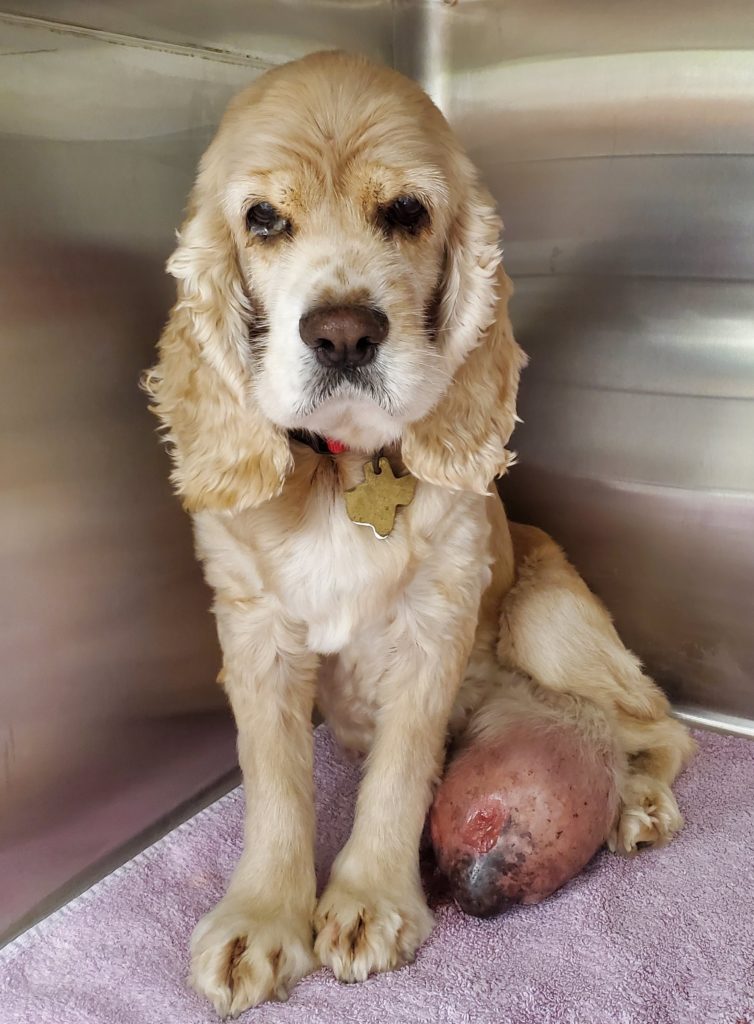
Signs & Treatment
- What to look for: One or more lumps of any size along the belly. They can be small or large, soft or firm, and single or multiple.
- Diagnosis: We typically start with a fine needle aspirate (FNA) to get an idea of the cell type. However, the only way to know for sure if it’s benign or malignant is with a biopsy, which is usually done by removing the entire mass.
- Treatment: The standard treatment is surgical removal of the tumor (lumpectomy) or the entire affected mammary chain (mastectomy). If the tumor is found to be malignant, chemotherapy may be recommended to treat or prevent spread.
Mammary Tumors in Cats
The situation with cats is significantly more serious. Unlike dogs, approximately 85-90% of mammary tumors in cats are malignant and highly aggressive. They tend to grow and spread to other parts of the body very quickly. For our feline friends, early detection and immediate action are absolutely critical.
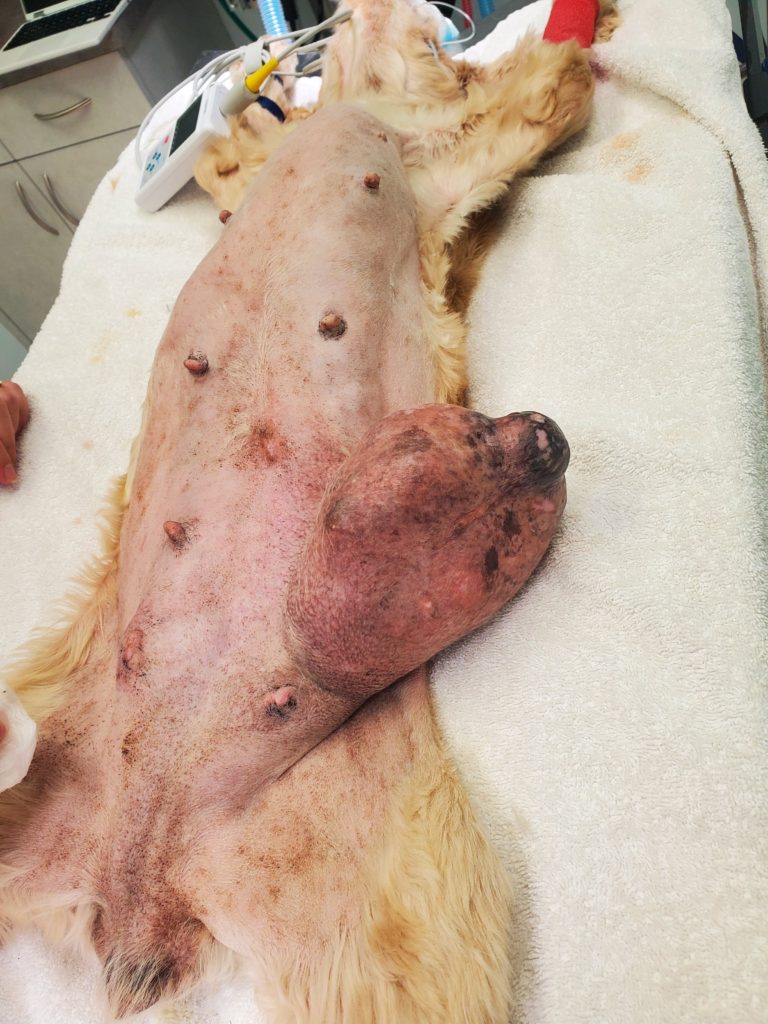
Signs & Treatment
- What to look for: The signs are similar to dogs—any lump or swelling along the mammary chains. Because of their aggressive nature, even tiny, pea-sized lumps are a major concern.
- Diagnosis: Diagnosis follows the same path as with dogs, but with a much higher suspicion of malignancy from the start.
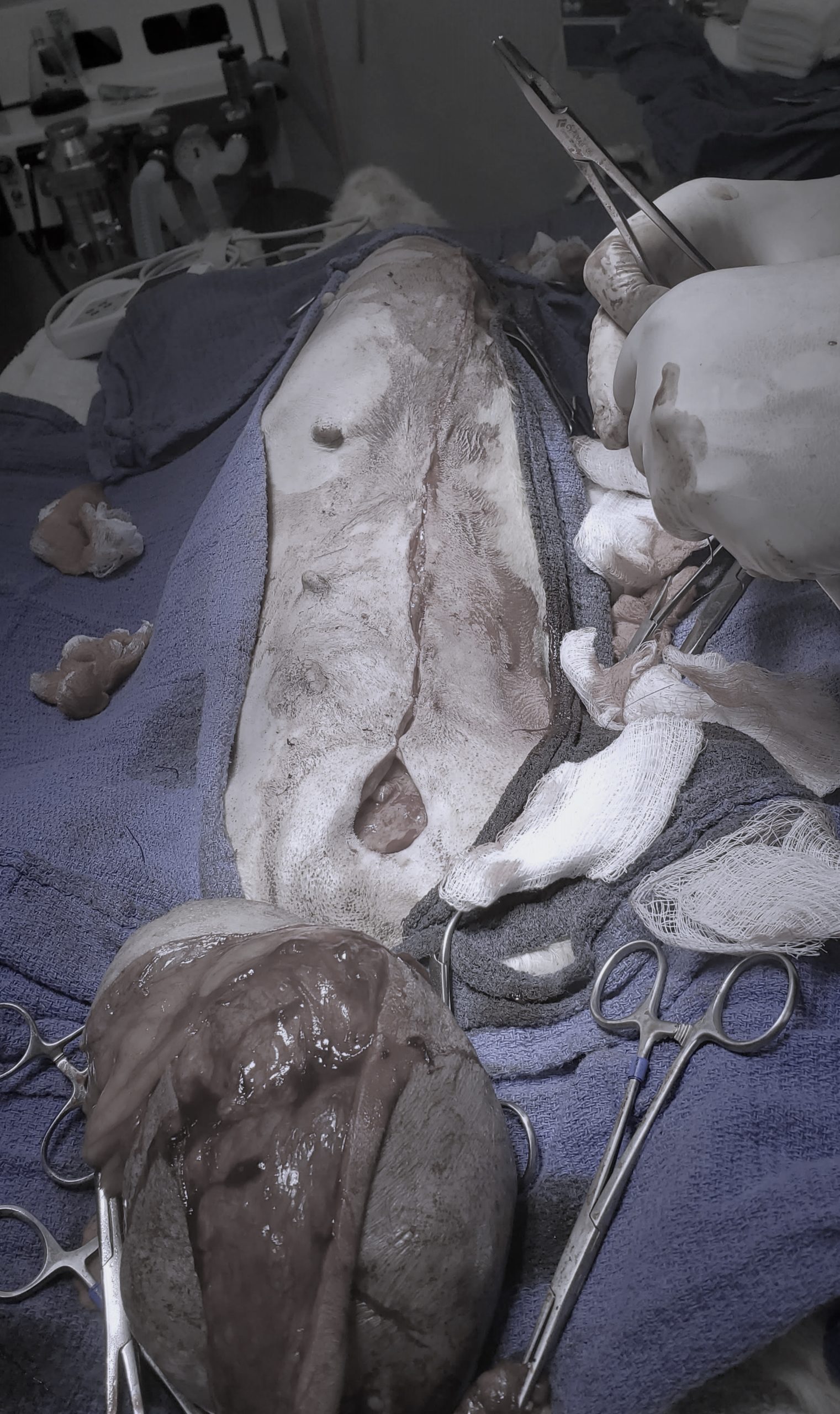
- Treatment: Due to their aggressive nature, treatment is also more aggressive. The standard of care is a radical mastectomy, where the entire chain of mammary glands on the affected side is removed. This is often followed by chemotherapy to combat the high risk of metastasis.
The #1 Way to Prevent Mammary Tumors: Early Spaying
This is one of the most powerful examples of preventative medicine in our field. The link between hormones and mammary cancer is undeniable. By spaying your pet, you dramatically reduce their risk.
- Dogs: According to the American College of Veterinary Surgeons, spaying before the first heat cycle reduces the risk of mammary tumors to just 0.5%. After the first heat, the risk jumps to 8%, and after the second, it’s 26%.
- Cats: Studies show that spaying before 6 months of age reduces the risk by over 90%.
Spaying your pet early is the single best decision you can make to protect them from this common and dangerous cancer.
Check for Lumps. Talk to Us About Spaying.We encourage all owners of unspayed female pets to perform regular at-home checks for lumps. If you find anything, please don’t wait. As your veterinarian in Tomball, serving Cypress, Magnolia, and Spring, we are here to provide a swift diagnosis and compassionate care. If you have a new puppy or kitten, let’s talk about the best time to schedule their spay surgery. It’s a routine procedure that can save them from a major illness down the road. |
Book an Appointment |